The Creole Matriarchs
Let's talk about it.
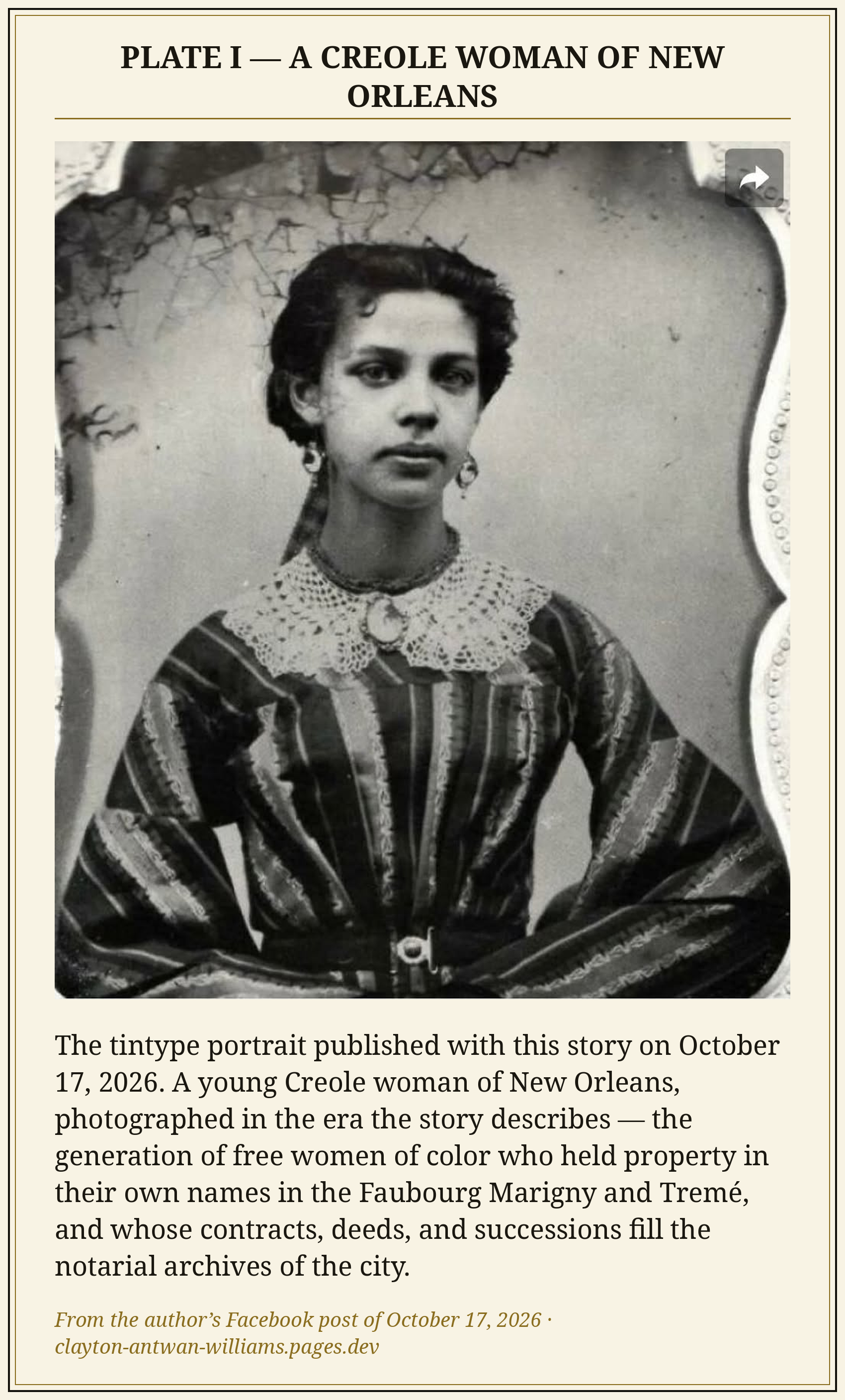
The legal system in antebellum Louisiana was explicitly set up to lock down the lives of free Creole women, but the historical records show a completely different story of resilience, strategy, and heavy economic independence. Even though the law strictly banned interracial marriage, it didn't stop long-term domestic partnerships from thriving all across New Orleans and the rural parishes of Southwest Louisiana. These families weren't hiding away in the dark. Instead, they built an unbreakable public paper trail right inside the notarial archives, property deeds, successions, and parish court registries to lock in their wealth and protect their children.
Since getting a formal marriage certificate was legally impossible, a notarized public contract became the absolute weapon for family survival. Free Creole women masterfully worked the legal system to safeguard their assets. White partners routinely bought land and cottages—especially in New Orleans neighborhoods like the Faubourg Marigny and Tremé, as well as acreage across the rural prairies—and put the titles exclusively in the woman’s name. This made sure the property belonged entirely to her as an independent entity, meaning it could never be touched by the man's creditors or his legal white heirs.
On top of that, because Louisiana law put strict limits on how much wealth a white man could actually leave to his mixed-race children in a will, couples engineered "simulated sales" while the man was still alive. They legally transferred ownership of land, money, and assets to the woman just like a standard, everyday business transaction. When white relatives tried to strip these families of their inheritances after a partner passed away, free Creole women aggressively hired lawyers and fought them flat-out in court. They successfully argued that their wealth was the direct result of their own hard labor, business smarts, and shared investments, setting massive legal precedents that protected entire enclaves of free people of color.
This specific legal strategy created an unprecedented class of independent, property-owning women of color who held serious economic power long before the Civil War even started. They weren't passive dependents hiding in the background; they were landlords, merchants, and sharp investors. They used their independent financial standing to build tight, self-sustaining communities, buy the freedom of enslaved relatives, and protect their ancestral bloodlines.
The true history of these resilient matriarchs isn't found in some hidden diary; it is written permanently into the very dirt they owned and the public records they signed to make sure their families survived.
Why do you think the true legal and economic power of these Creole matriarchs is so often left out of the history books? Drop your thoughts below.
The Picture
Publication
First published on the author’s Facebook page, October 17, 2026, where it reached more than 23,000 readers. The text stands as written.
Clayton Antwan Williams is a family historian, independent archival researcher, and citizen of the Atakapa-Ishak Nation specializing in primary-source documentation of Southwest Louisiana Creole and Indigenous family lineages.
The documented work is shared as it surfaces on Facebook.
© 2026 Clayton Antwan Williams. All rights reserved.