Past the Ghost Stories
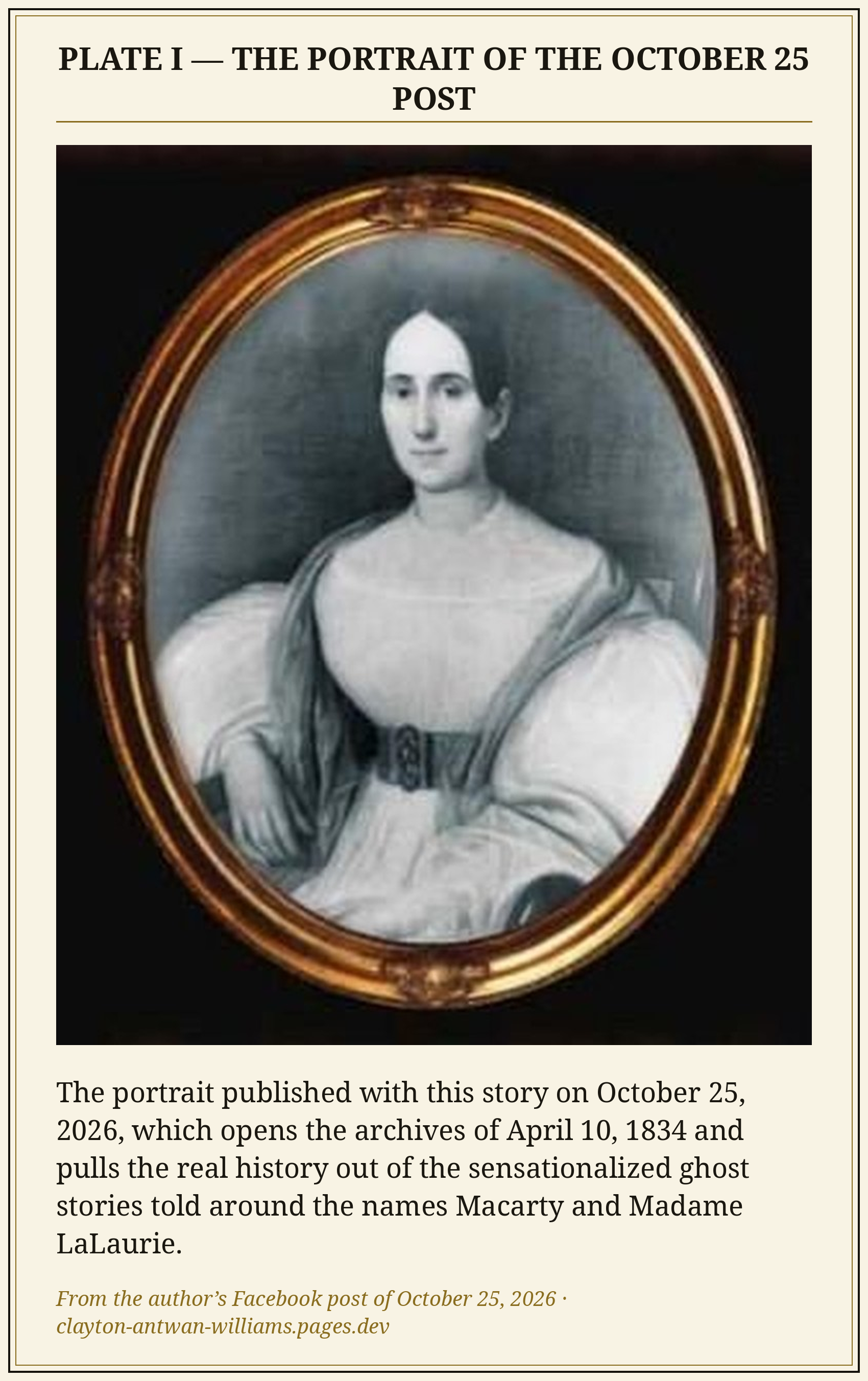
Let’s talk about it. Let's look at the actual archives from April 10, 1834, and pull the real history out of the sensationalized ghost stories. The mainstream narratives love to focus on the name Macarty, or the title Madame LaLaurie, turning a horrific reality into cheap tourist entertainment. But if you look past the high-society names and read the actual testimonies from that spring day, the real story is about the unyielding vigilance, the strategic resistance, and the absolute power of the New Orleans Afro-Creole community that forced the system to respect human dignity.
To understand how the truth came to light, you have to understand the environment of antebellum New Orleans. Under the restrictive frameworks of the Louisiana Black Code, the legal system was structured to protect property holders and silence the voices of the bound. Yet, right under the noses of the elite, our people maintained a sophisticated network of awareness. They watched the courtyards, kept track of the missing, and carried the heavy truths that the official parish registries tried to ignore.
The community’s vigilance had already forced the legal system to act once before. In 1833, widespread rumors and testimonies regarding the abuse inside the household led a local lawyer to launch an official investigation. This came to a head after an eight-year-old girl named Leah tragically lost her life falling from the roof while fleeing a whipping. The court found the owner guilty of cruel abuse and forced the forfeiture of nine remaining bound people. They were taken to a public auction, but the family exploited a loophole, using a relative to buy them right back and smuggle them back into the house in secret. Church funeral registers from the period confirm the heavy toll taken on our people, recording the loss of individuals like Bonne and her children: Juliette, Florence, Jules, and Leontine.
The ultimate breaking point didn’t happen by accident. It was forced by a seventy-year-old Creole woman who was chained to the kitchen stove. Knowing the severe consequences of defiance under the law, she chose to risk her life by setting the kitchen ablaze. It was a calculated, revolutionary act of self-sacrifice designed to draw the eyes of the entire city to the Royal Street property. She used the only weapon she had left to shatter the illusion of elite respectability and lay the truth bare.
When the smoke cleared and the neighboring citizens bypassed the owners—who had refused in a gross and insulting manner to hand over the keys—they broke down the doors. The response from the community was immediate, organized, and furious. The free and enslaved population of New Orleans didn't wait for the colonial judges or the city council to deliberate. The New Orleans Bee, the city's French-language newspaper, recorded that an outraged multitude gathered in response to the "barbarous and fiendish atrocities committed by the woman Lalaurie upon the persons of her slaves".
This was a massive, righteous uprising. The New Orleans Bee documented that a crowd of 4,000 people gathered at the Cabildo where the survivors were taken for safety. Driven by pure indignation, the people descended on the mansion, demolishing everything but the walls. They destroyed the expensive imported furniture, broke through the structures, and stripped the architecture bare as a direct, physical rejection of the cruelty it housed. They created a scene so intense that the wealthy, well-connected perpetrators had to flee the city in absolute terror under the cover of darkness, chased out of Louisiana by the fury of the people.
The original two-story exposed brick residence was completely gutted by the fire and the righteous anger of the citizens. The present-day three-story Empire-style stucco mansion was actually rebuilt from the ground up in 1838 for a man named Charles Caffin. Furthermore, during the Reconstruction Era, that very same building was turned into an integrated school, transforming a space once defined by oppression into a place of shared education and progress for the community.
When we talk about this history, the focus belongs on the strength of the streets, not the sickness in the attic. The ancestors of 1834 weren't passive victims waiting for a rescue; they were the architects of the exposure, the witnesses who demanded justice, and the force that drove the oppressor out. Their resilience remained rooted in the soil of New Orleans, keeping the community unbroken, while the names of the cruel were written out of the city's future. That is the real legacy we honor.
The Picture
Publication
First published on the author’s Facebook page, October 25, 2026. The text stands as written.
Clayton Antwan Williams is a family historian, independent archival researcher, and citizen of the Atakapa-Ishak Nation specializing in primary-source documentation of Southwest Louisiana Creole and Indigenous family lineages.
The documented work is shared as it surfaces on Facebook.
© 2026 Clayton Antwan Williams. All rights reserved.