Family Historian and Citizen of the Atakapa-Ishak Nation. Every story here is researched from the original records — the documents are inside the stories, with their citations, so you can check the paper yourself.
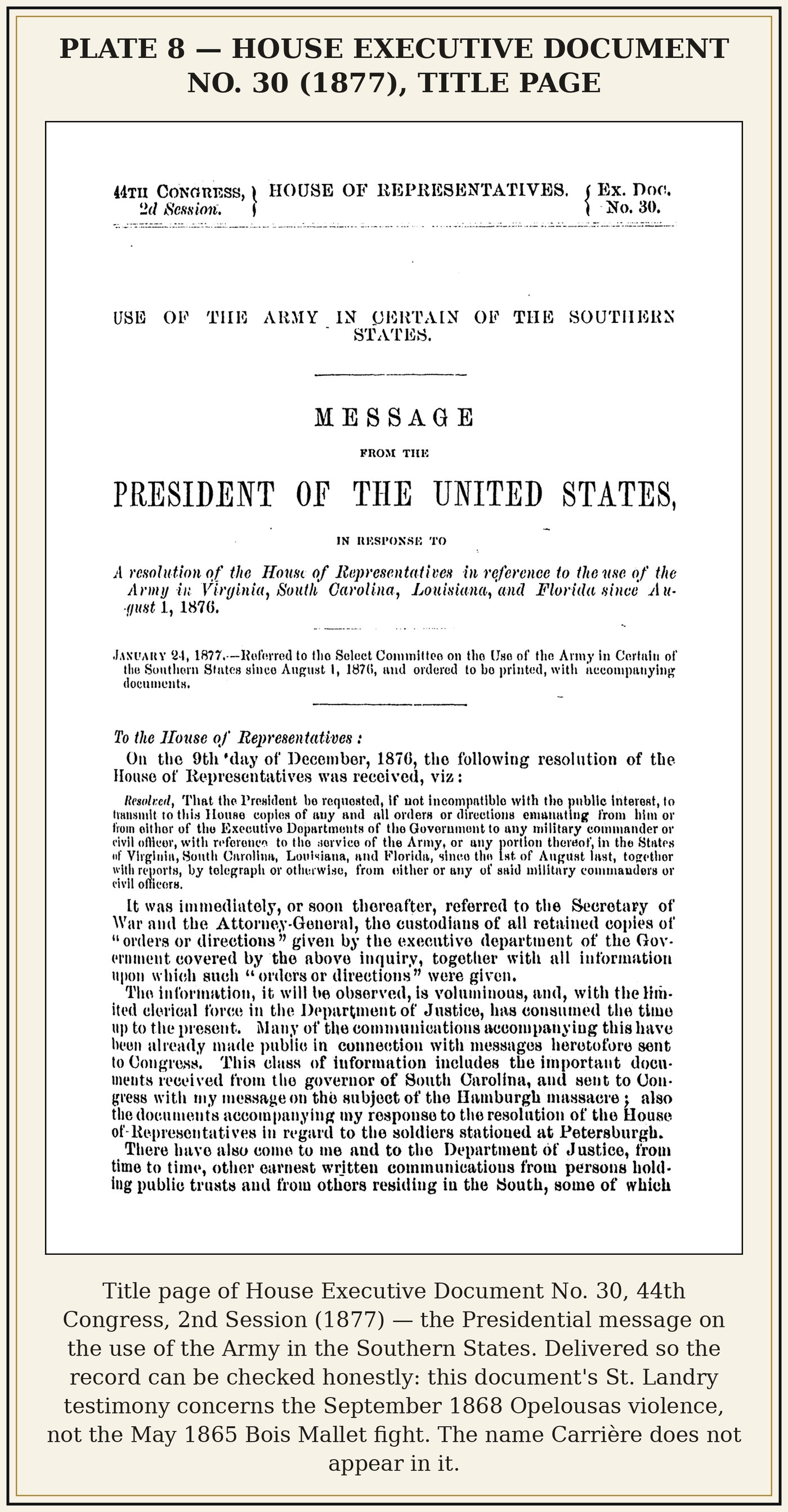
St. Landry Parish, 1863–1865 — the Jayhawkers the Confederacy could not break
In May 1865, more than a month after Lee surrendered at Appomattox, Confederate cavalrymen were still riding into the woods west of Opelousas to hunt down St. Landry Parish families. They were not chasing stray bandits — they were trying to break a tightly bound Creole and Indigenous prairie kinship network that had defied Confederate rule for more than two years…
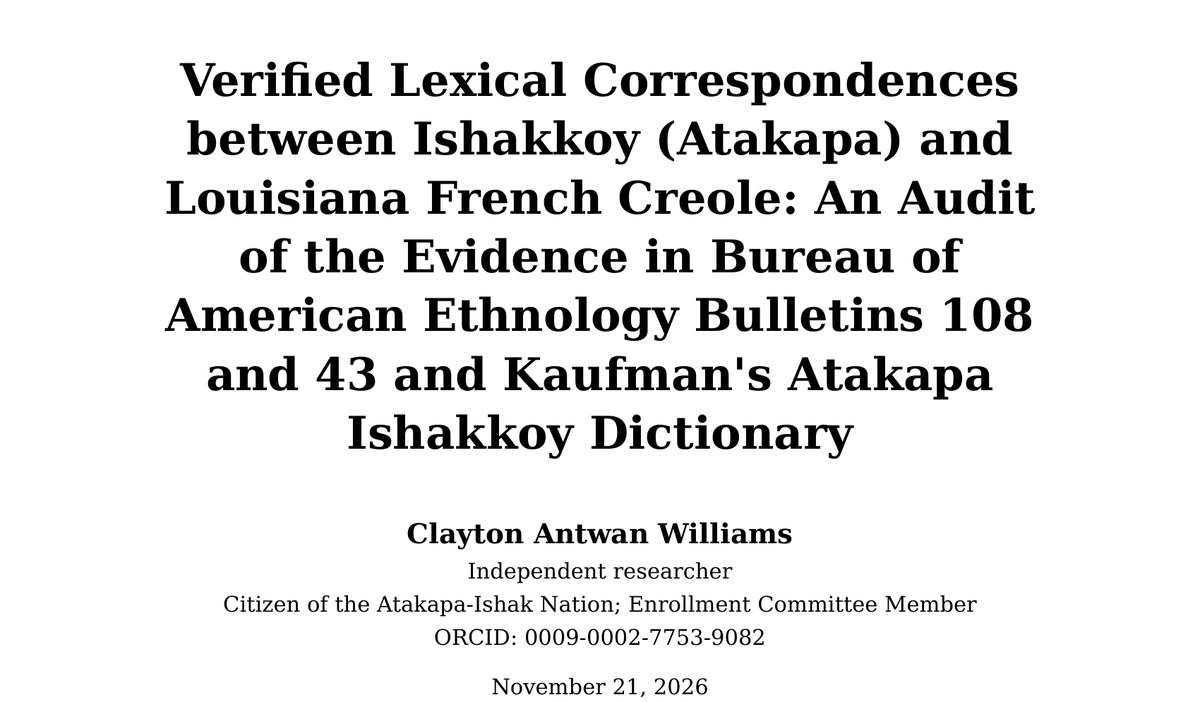
Submitted to SocArXiv — and transmitted to the Smithsonian’s National Anthropological Archives
On November 21, 2026, my paper, “Verified Lexical Correspondences between Ishakkoy (Atakapa) and Louisiana French Creole,” was submitted to SocArXiv, where it is pending moderation. Its ORCID stands on the paper; its DOI will be added when SocArXiv issues it. Six correspondences hold up on the documentary record of the bulletins; three more are attested in Kaufman’s dictionary; eight claimed words were tested and rejected…
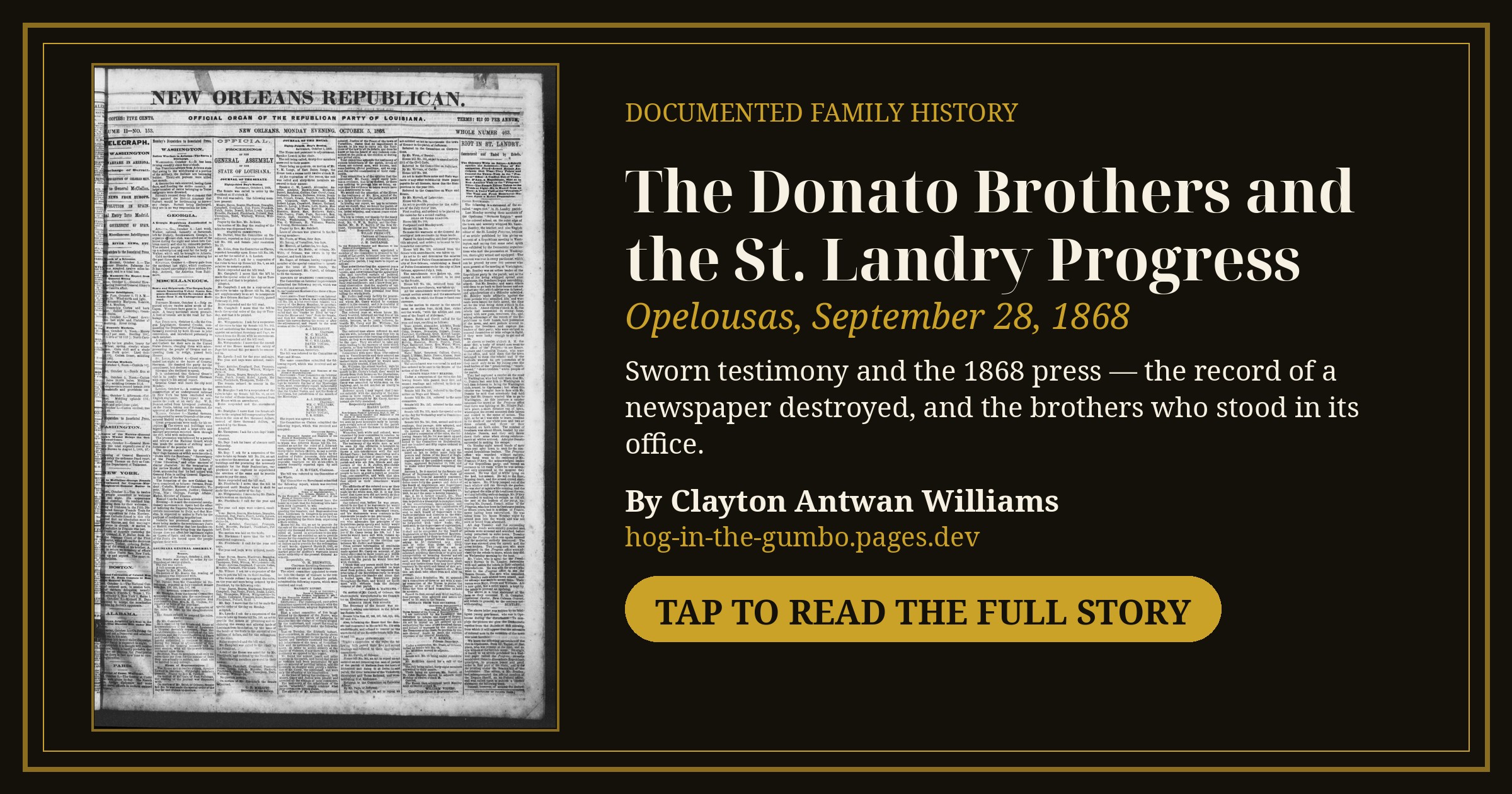
Let's talk about it. If your family comes out of Mallet, Plaisance, Grand Coteau, Prairie Basse, Washington, or Opelousas, I want to ask you something straight up. Did your grandparents or great-grandparents ever talk about la chasse à la jambe noire—the Blackleg Hunt—or what happened in St. Landry Parish back in September…
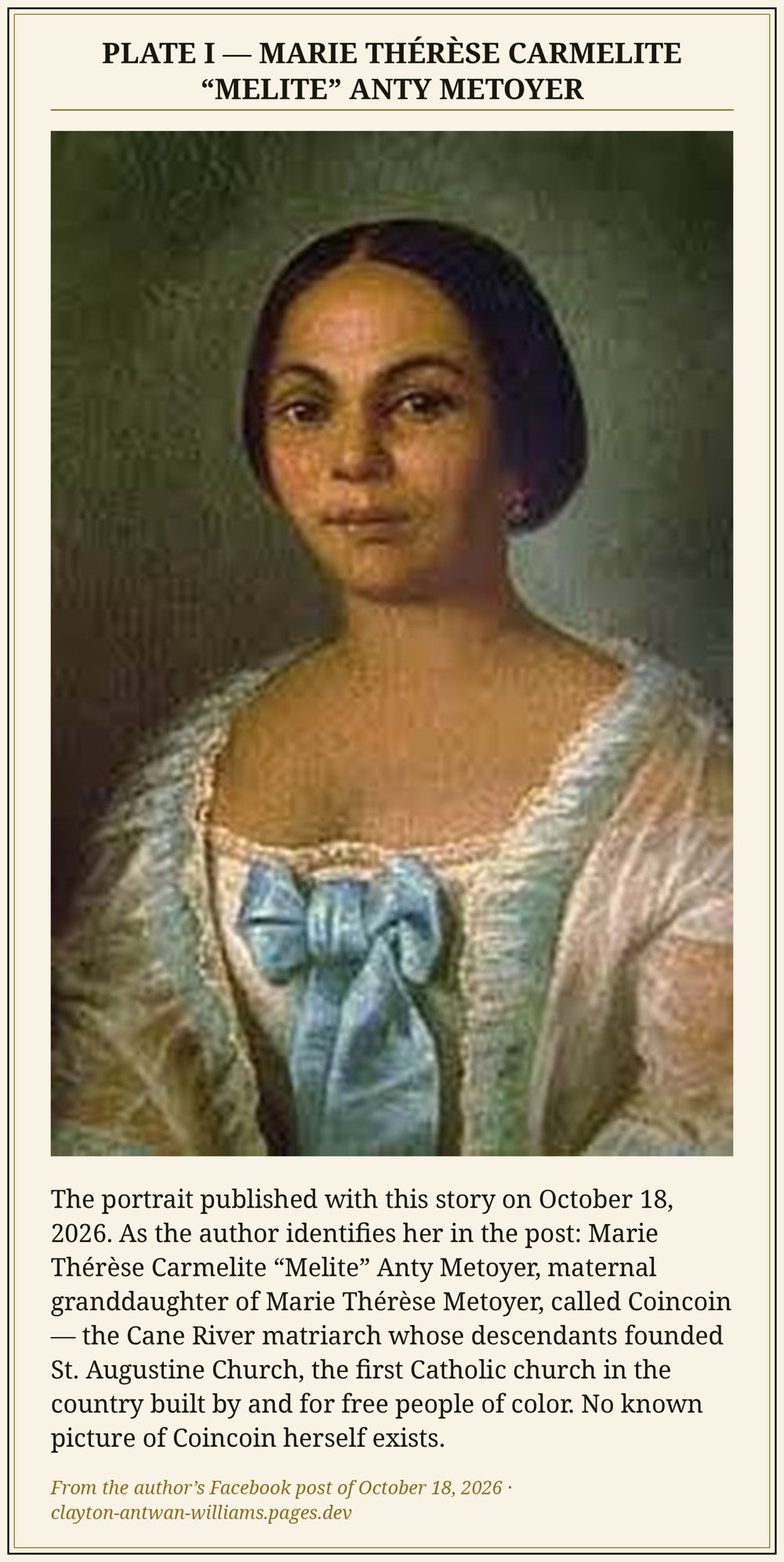
Coincoin, the Cane River Creoles, and the Blood That Remembered the Address
If you look at standard history books or scroll through the internet, you see the same old thing over and over. They always try to force us into a simple checkbox…
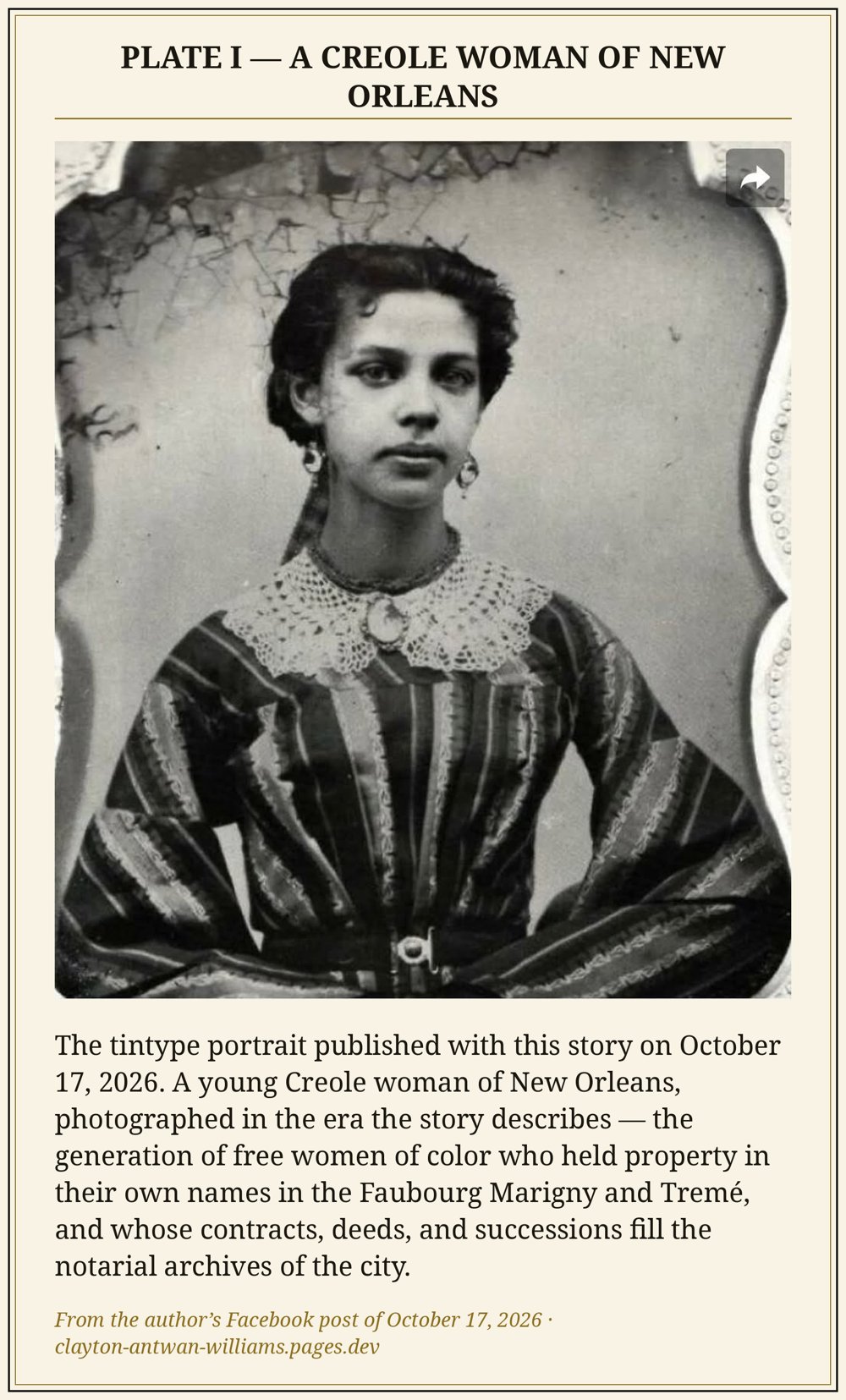
Free Women of Color, the Notarial Record, and Economic Independence in Antebellum Louisiana
The legal system in antebellum Louisiana was explicitly set up to lock down the lives of free Creole women, but the historical records show a completely different story of resilience, strategy, and heavy economic independence…
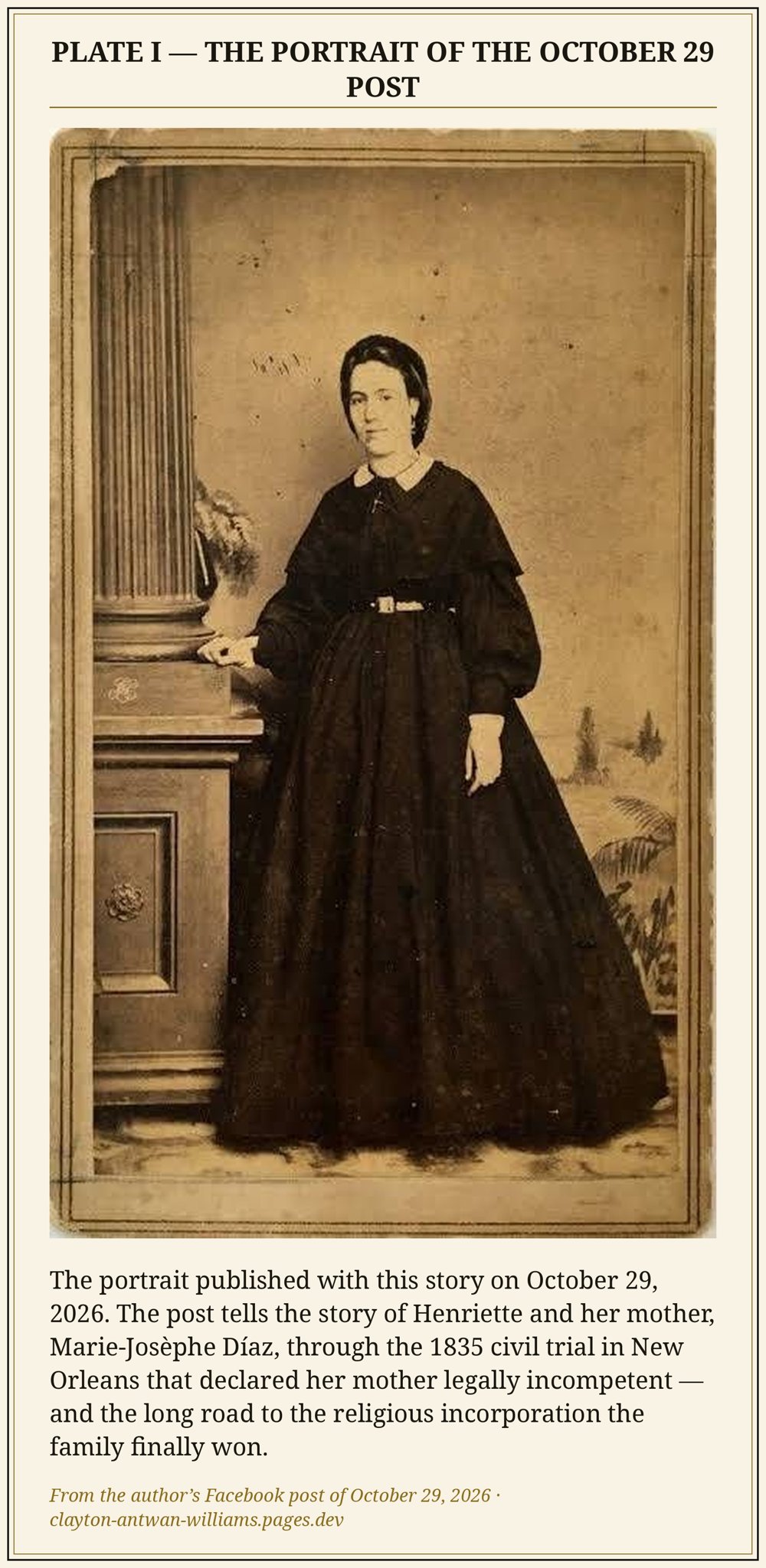
The 1835 Trial of Marie-Josèphe Díaz and the Fracturing of a Family
The 1835 civil trial that declared Henriette’s mother, Marie-Josèphe Díaz, legally incompetent provides a rare, stark look into the fracturing of their family…
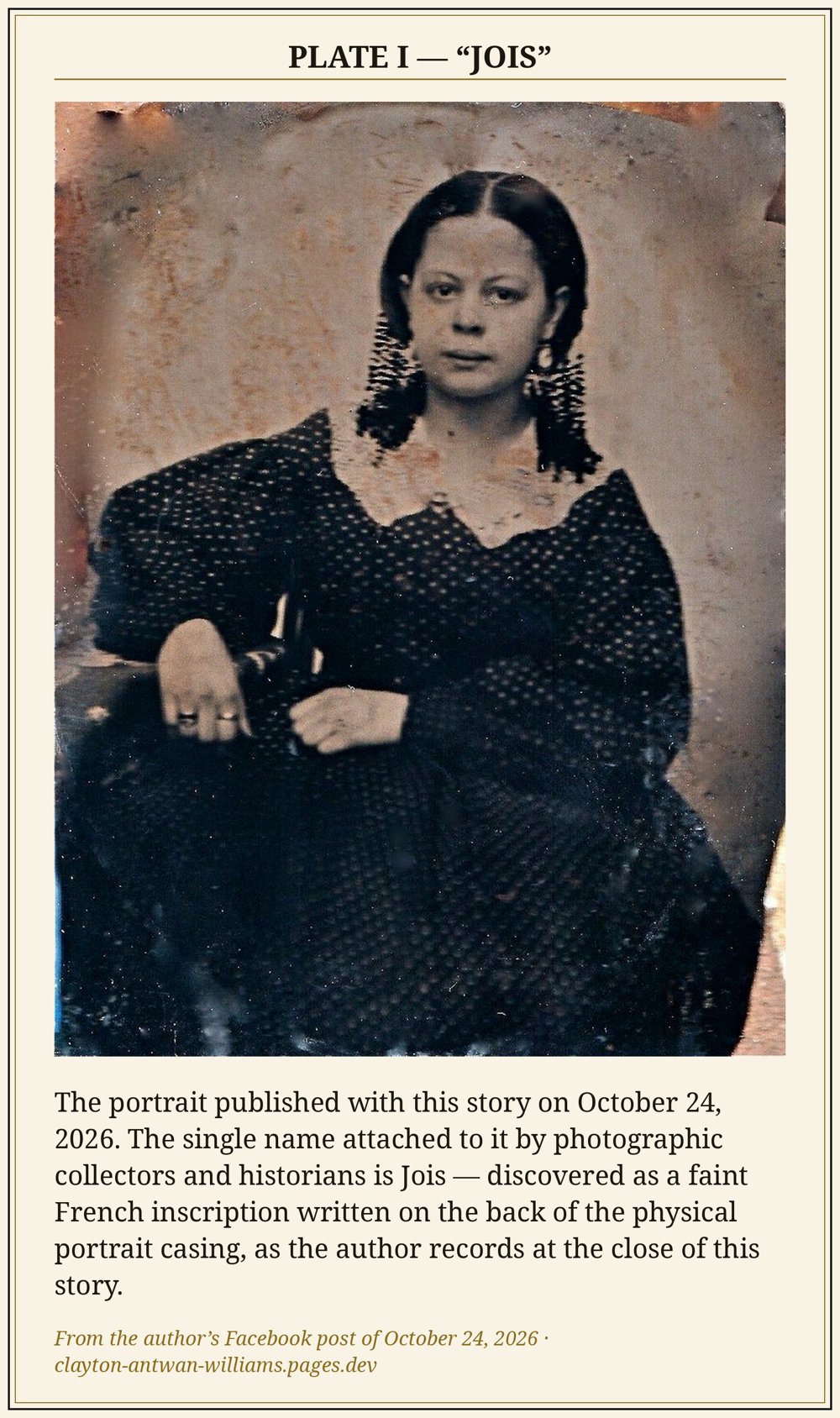
The Portrait with One Name, Written on the Back of the Casing
The modern, simplified narratives often paint a flat, powerless picture of the antebellum South. But if you blow the dust off the original Spanish and French civil records, a completely different universe appears…
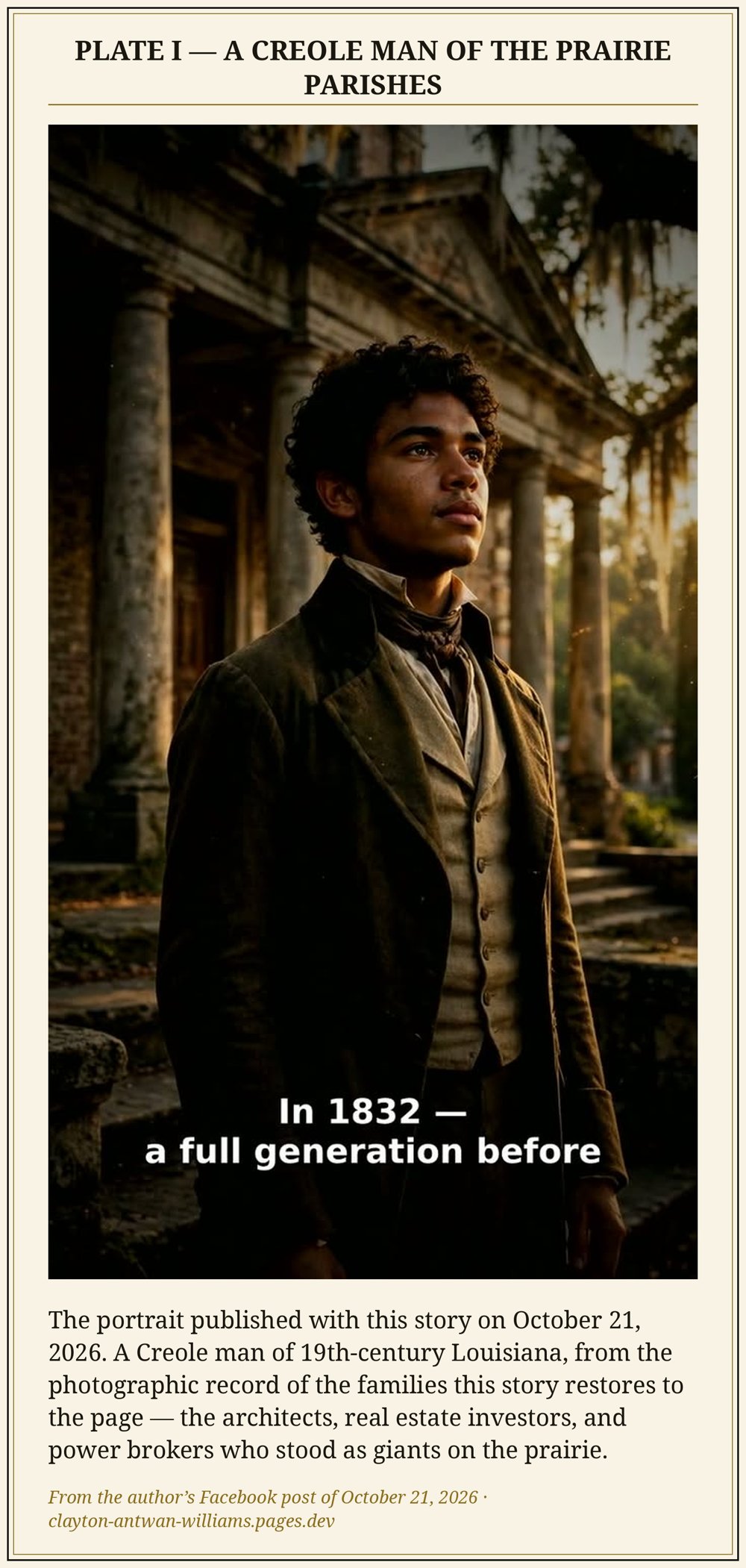
If you look at the standard history books covering 19th-century Louisiana, they usually give you a long list of Anglo plantation barons and white French aristocrats. But there is a massive chapter of our history that standard pages leave completely out…
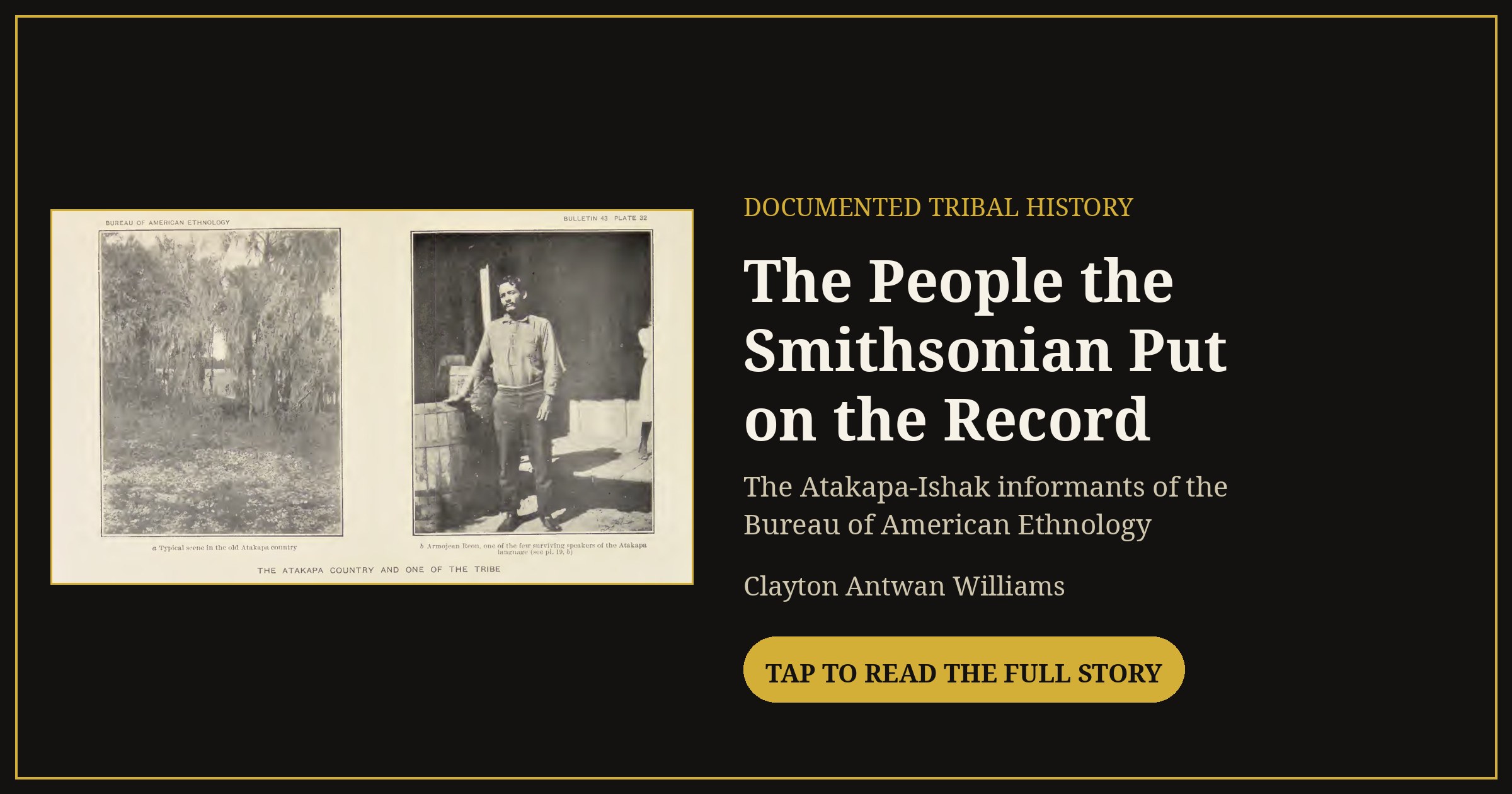
The Atakapa-Ishak Informants of the Bureau of American Ethnology
When we look at our tribal history, it’s easy to focus entirely on immediate family names. But if we want to show our continuous survival to the outside world, we have to look at the bigger picture and map the entire web…
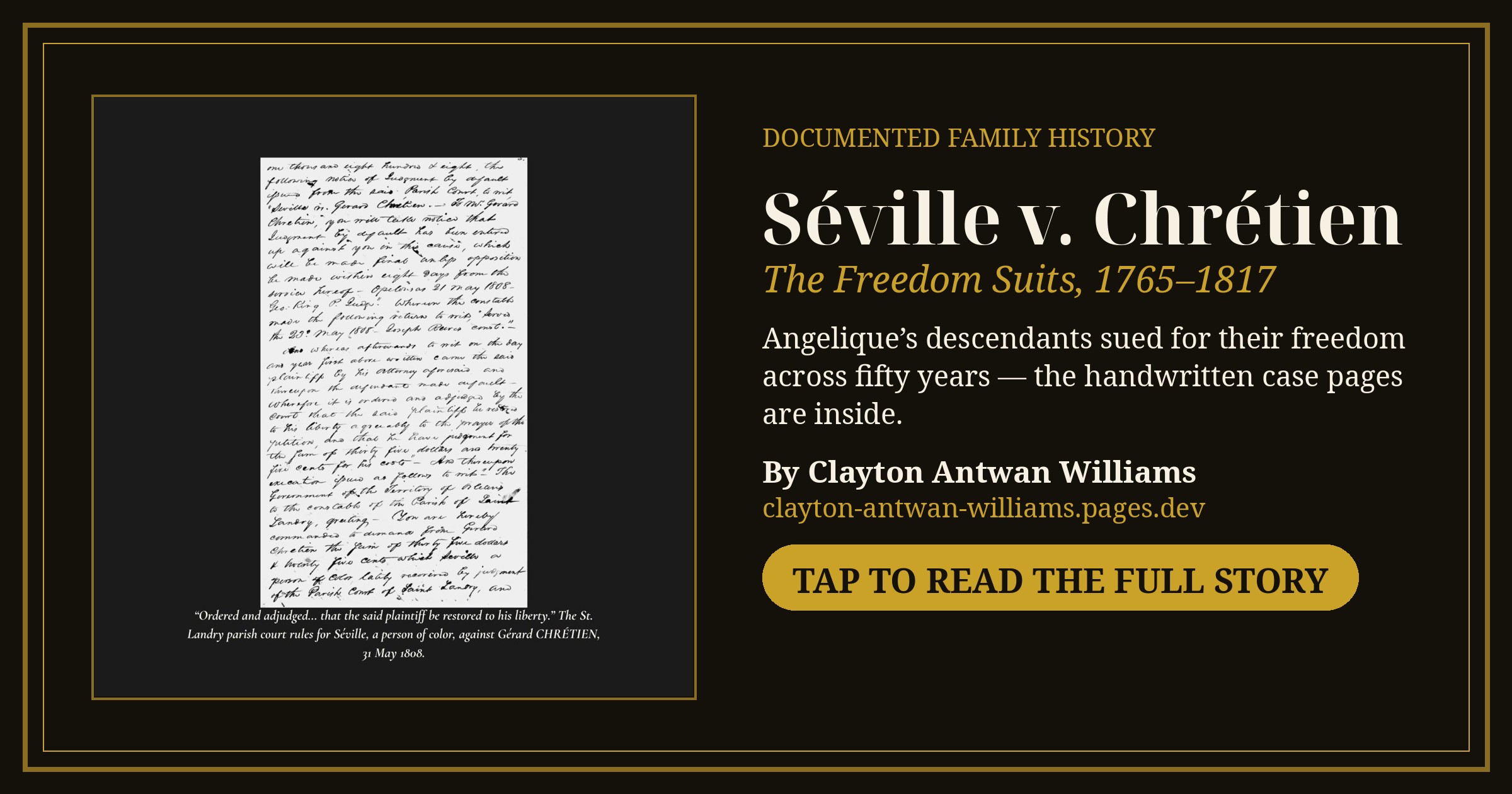
The Freedom Suits of Angelique’s Descendants, 1765–1817
The standard history of early Louisiana is written from the desks of white planters and the benches of corrupt judges. When historians do look at the archives of St. Landry Parish, they usually focus on the tragic, rigged timeline of the Seville versus Chretien freedom suit of 1817…
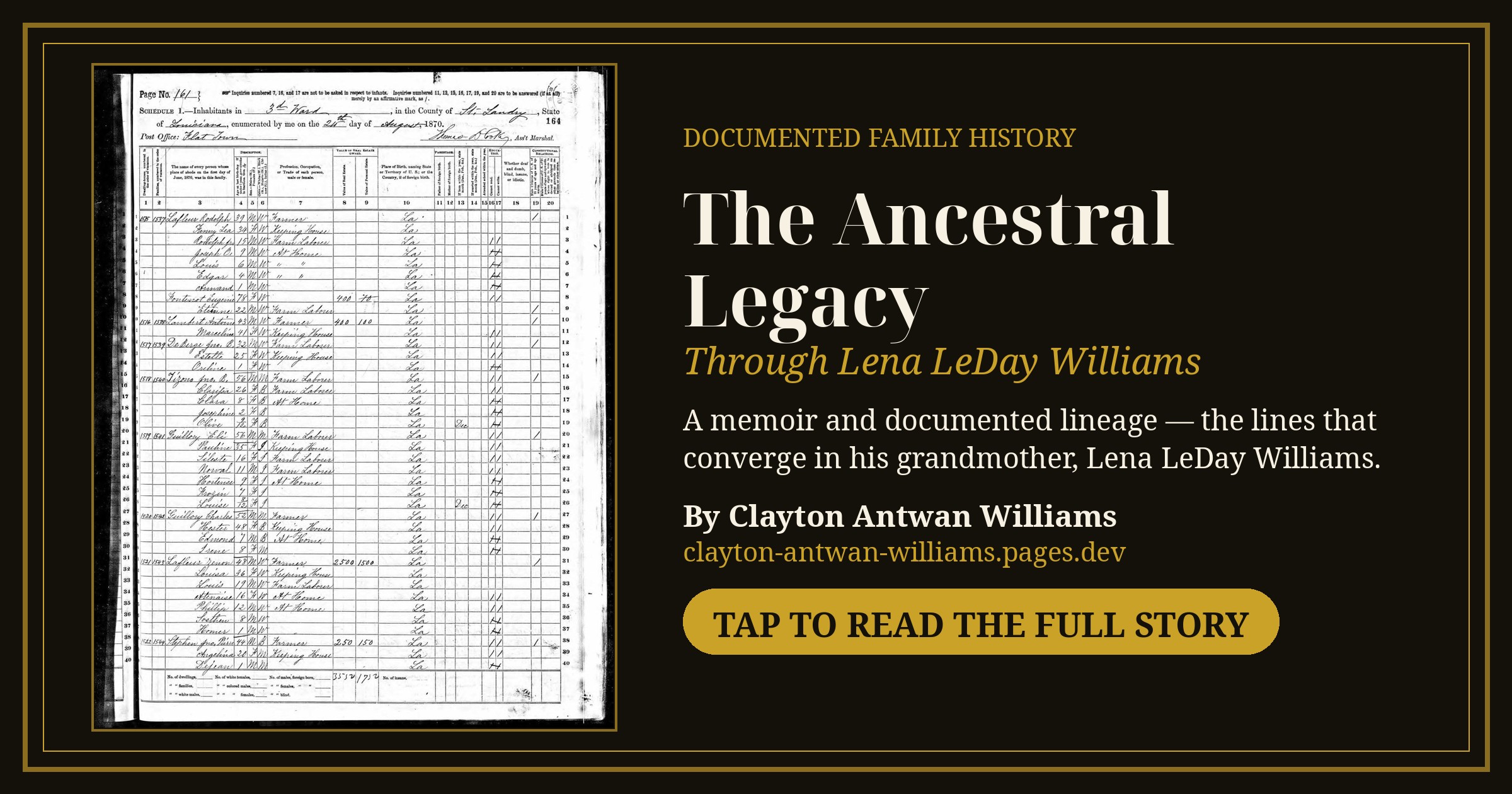
A Memoir and Documented Lineage Through Lena LeDay Williams
To my fellow Creole family, researchers, and cousins: I am sharing my personal memoir and documented lineage tracing through my beloved grandmother, Lena LeDay Williams…
From the First Baker of New Orleans to the Prairie Frontier
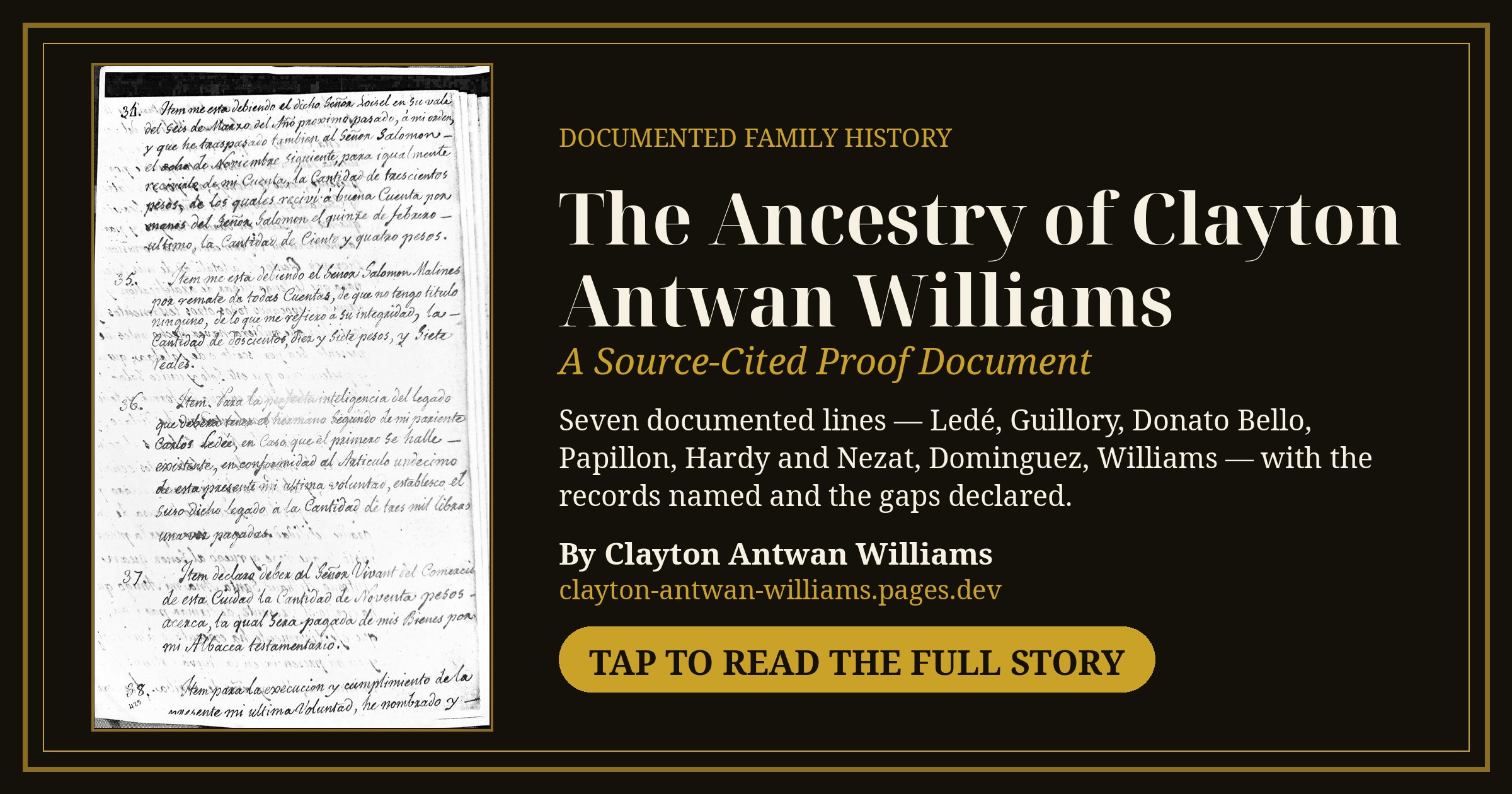
Our family history has always been a collaborative journey of discovery. Ever since I first began tracking our lines back in 2015, my focus has been on preserving the absolute integrity of our collective paper trail…
Lineage Discovery Update: Documentation for My Fourth Great Grandparents. I wanted to share a major update regarding our family history research. I have successfully located the original federal documentation for my fourth great grandparents, Paul Ledet (Lede) and Marie Louise Guillory…
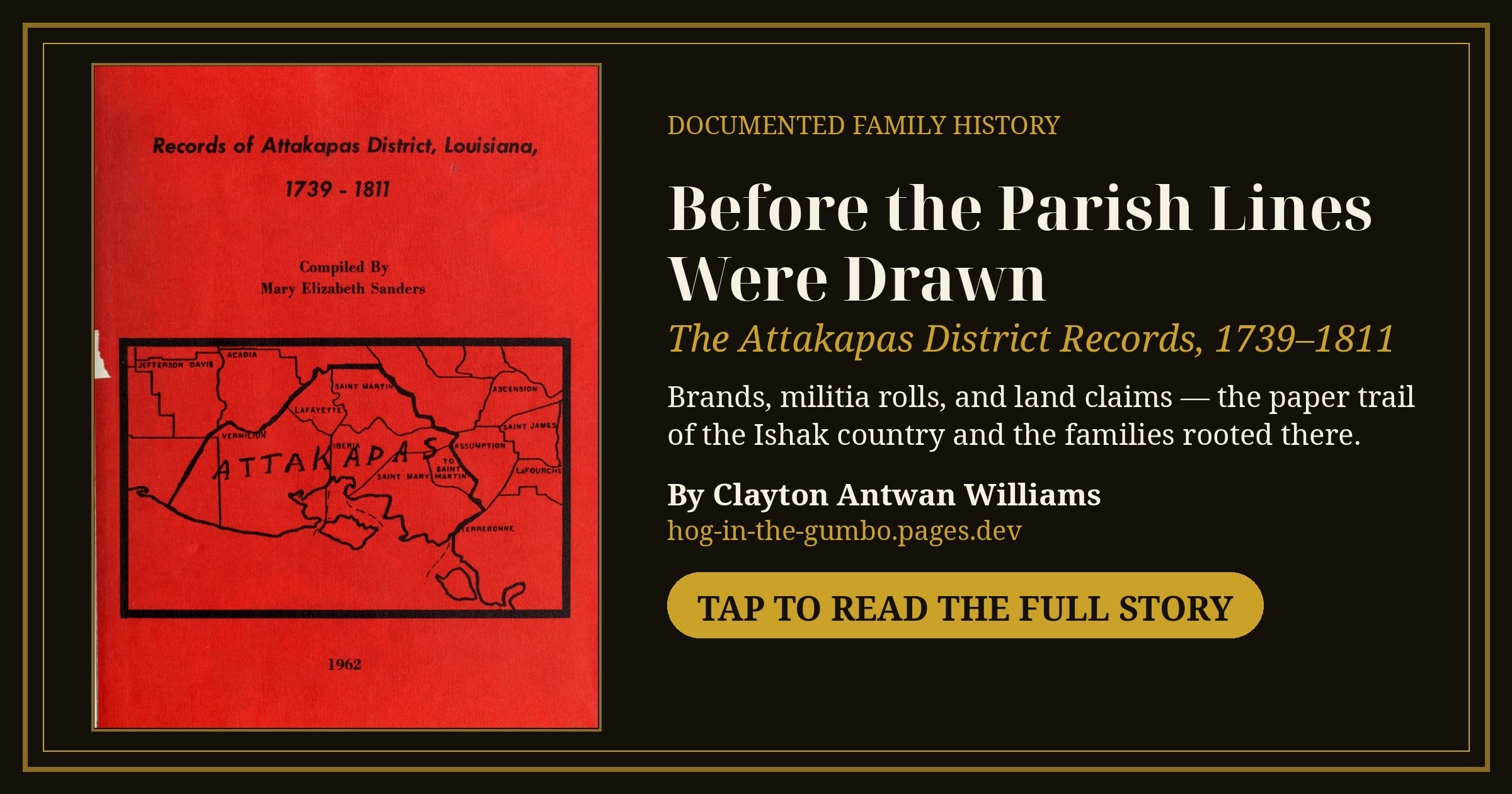
Long before parish lines were ever drawn across Southwest Louisiana, the prairies and bayous stretching between the Bayou Teche and the Vermilion River belonged to the Ishak. When French and Spanish officials moved into the region in the 1700s, they wrote our people into their ledgers under the name Attakapa, and they ran the territory…
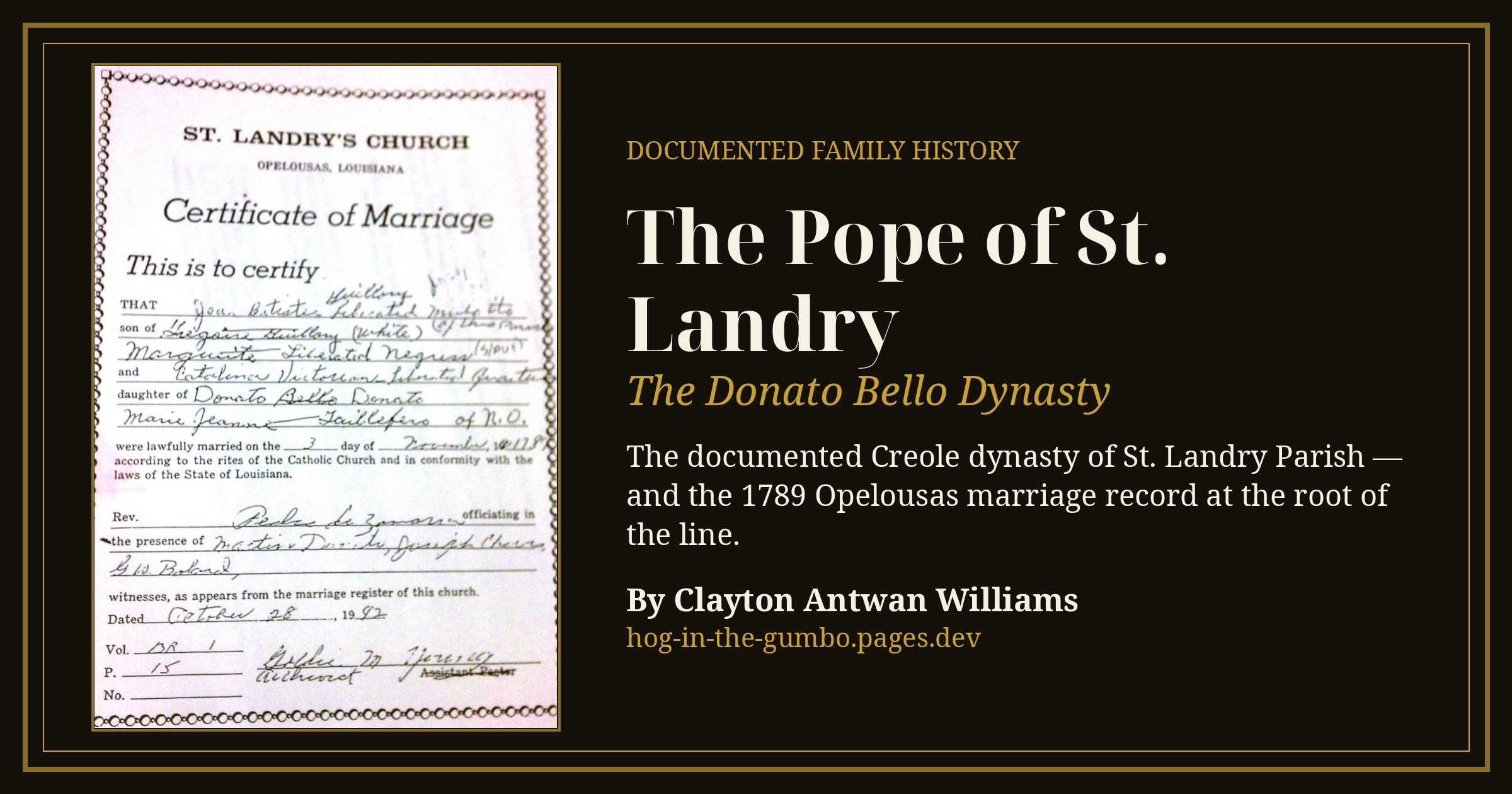
If you open a standard history textbook looking for the most powerful figures in nineteenth-century Louisiana, all you ever see is a list of white governors, plantation barons, and French aristocrats. What those books leave out completely is the documented history of a mixed Creole dynasty that built a real estate, agricultural, and…
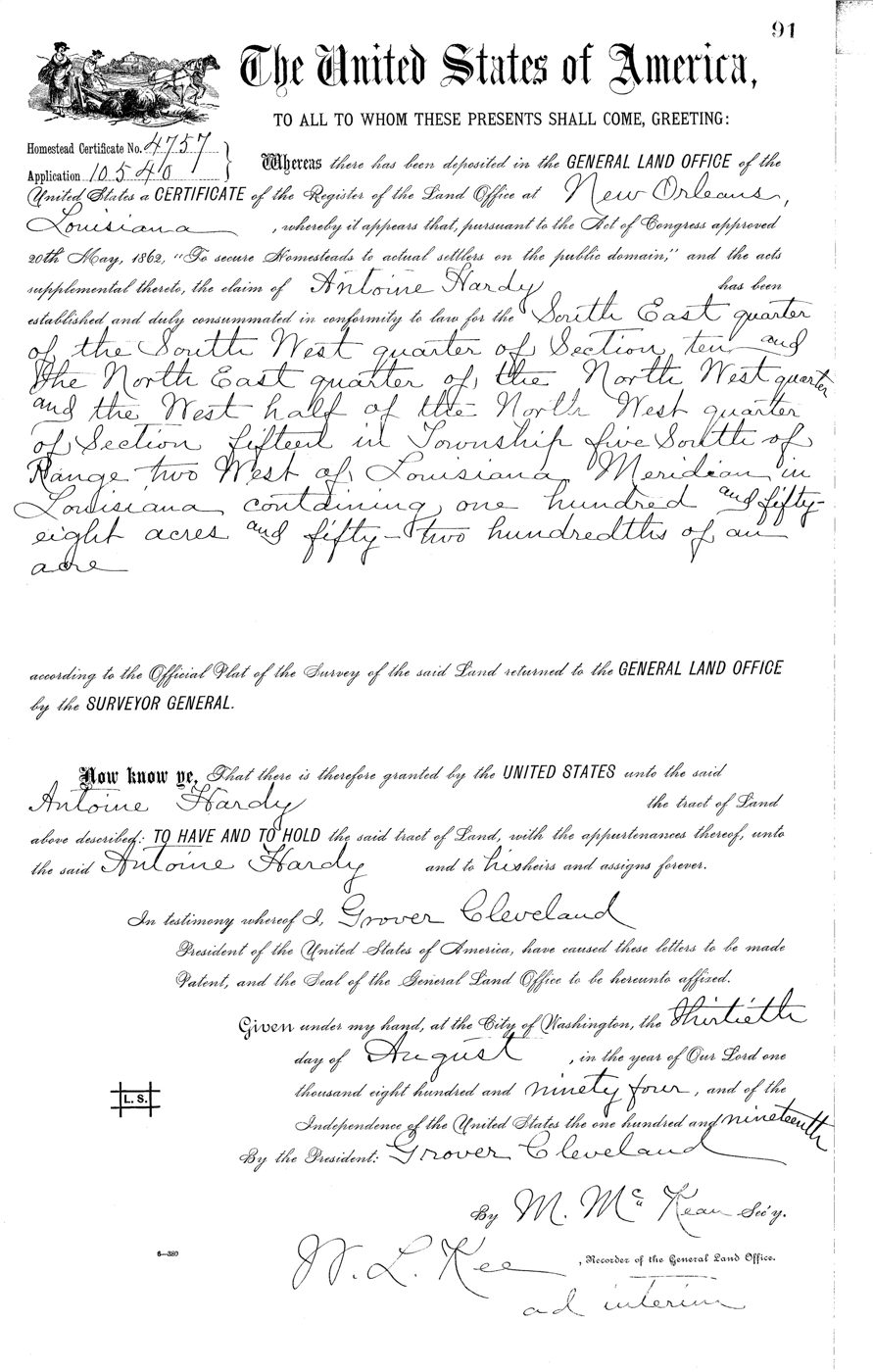
Certificate No. 4757 — New Orleans Land Office, 1894
Real family history does not hide behind blacked-out screenshots. It puts the document on the table, with the numbers showing, where anybody can check…